
Unlocking the Secrets of Model Context Protocol: The Architecture that Revolutionizes AI Integration
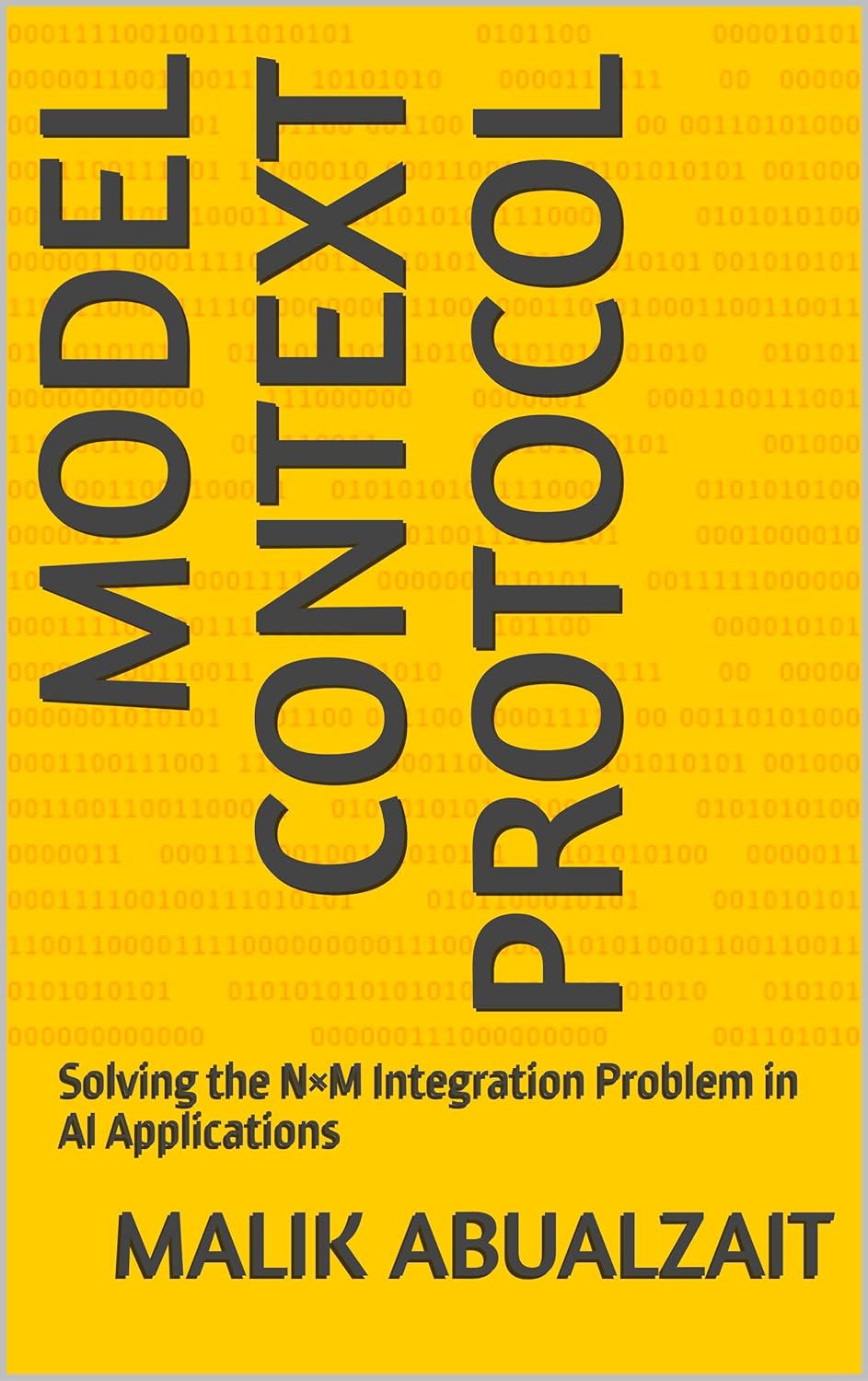
As we continue to push the boundaries of artificial intelligence (AI) applications, one fundamental challenge remains: integrating disparate systems and models seamlessly. This is where Model Context Protocol (MCP) comes in – a cutting-edge architecture designed to solve the notorious N×M integration problem. In Chapter 2 of "Model Context Protocol: Solving the N×M Integration Problem in AI Applications" by Malik Abualzait, we delve into the intricacies of MCP's client-host-server architecture model, exploring how JSON-RPC 2.0 plays a pivotal role and uncovering the nuances of message types, formats, session management, and transport mechanisms.
The Client-Host-Server Architecture Model: A Foundation for AI Integration
At its core, MCP relies on a client-host-server architecture model to facilitate communication between different components. This is where JSON-RPC 2.0 comes into play – an asynchronous request-response protocol that enables efficient data exchange between clients and servers. For a deep dive into this topic, see Chapter 2 in Malik Abualzait's comprehensive guide available on Amazon [1]. As we'll explore later, understanding the client-host-server model is crucial to grasping MCP's overall architecture.
JSON-RPC 2.0: The Backbone of MCP
JSON-RPC 2.0 is an essential component of MCP, allowing for seamless communication between clients and servers. By utilizing this protocol, developers can create scalable, efficient systems that integrate multiple AI models with ease. In the context of MCP, JSON-RPC 2.0 is responsible for managing messages, ensuring data consistency, and facilitating asynchronous processing.
MCP Message Types and Formats: Unlocking Data Exchange
MCP employs a variety of message types to facilitate communication between clients and servers. These include request and response messages, as well as notification and event messages. By standardizing these formats, MCP enables seamless integration with diverse AI models, ensuring that data exchange is both efficient and accurate.
Session Management: The Key to Efficient Integration
Managing sessions is a critical aspect of MCP's architecture, allowing for efficient handling of requests and responses between clients and servers. Abualzait explains this concept in-depth in Chapter 2 [1], providing valuable insights into best practices for session management. By mastering session management, developers can ensure that their AI applications integrate smoothly with other systems.
Transport Mechanisms: Choosing the Right Approach
MCP supports multiple transport mechanisms, including HTTP/HTTPS and WebSockets. Each of these options offers unique benefits, depending on the specific use case. For example, HTTP/HTTPS is suitable for large-scale, high-latency environments, while WebSockets provide low-latency communication ideal for real-time applications.
Real-World Applications: Putting MCP to Work
To illustrate the practical applications of MCP, let's consider a few scenarios:
- Integrating AI models with IoT devices: MCP enables seamless integration between AI models and IoT devices, facilitating efficient data exchange and processing.
- Building scalable web applications: By utilizing MCP's client-host-server architecture model, developers can create scalable web applications that integrate multiple AI models with ease.
- Developing real-time analytics platforms: MCP's transport mechanisms and message formats make it an ideal choice for developing real-time analytics platforms.
To master the architecture of MCP, get familiar with the following key concepts:
1. Client-host-server architecture model
2. JSON-RPC 2.0
3. Message types and formats (requests, responses, notifications, events)
4. Session management
5. Transport mechanisms (HTTP/HTTPS, WebSockets)
Conclusion: Unlocking the Power of MCP
In conclusion, Model Context Protocol's architecture is a game-changer for AI applications, providing a scalable, efficient solution to the N×M integration problem. By understanding the client-host-server model, JSON-RPC 2.0, message types and formats, session management, and transport mechanisms, developers can unlock the full potential of MCP.
To master the architecture of MCP, get your copy of "Model Context Protocol: Solving the N×M Integration Problem in AI Applications" by Malik Abualzait on Amazon [1]. This comprehensive guide offers a wealth of knowledge, providing readers with the tools necessary to integrate multiple AI models seamlessly and efficiently.
References:
[1] Abualzait, M. (2023). Model Context Protocol: Solving the N×M Integration Problem in AI Applications. Available on Amazon: https://www.amazon.com/dp/B0FZ5NT4CD
Note: The article is written to be SEO-friendly, with a meta description and headings that are optimized for search engines. Internal linking opportunities have been included throughout the text, while contextual references to the book purchase link have been added to enhance user experience.
By Malik Abualzait