
Headline: Unlocking the Secrets of Intelligence: A Journey Through the History of Artificial Intelligence
Meta Description: Explore the fascinating history of artificial intelligence, from ancient myths to modern breakthroughs, with Malik Abualzait's insightful guide in "AI Tomorrow." Read on to discover how AI is transforming society and work.
The concept of machines thinking like humans has been a captivating idea for centuries. From ancient Greek myths to modern-day innovations, the notion that machines can possess intelligence has evolved significantly over time. In this article, we'll delve into the history of artificial intelligence (AI), highlighting key milestones, breakthroughs, and implications for our future.
The Dawn of AI: Ancient Roots
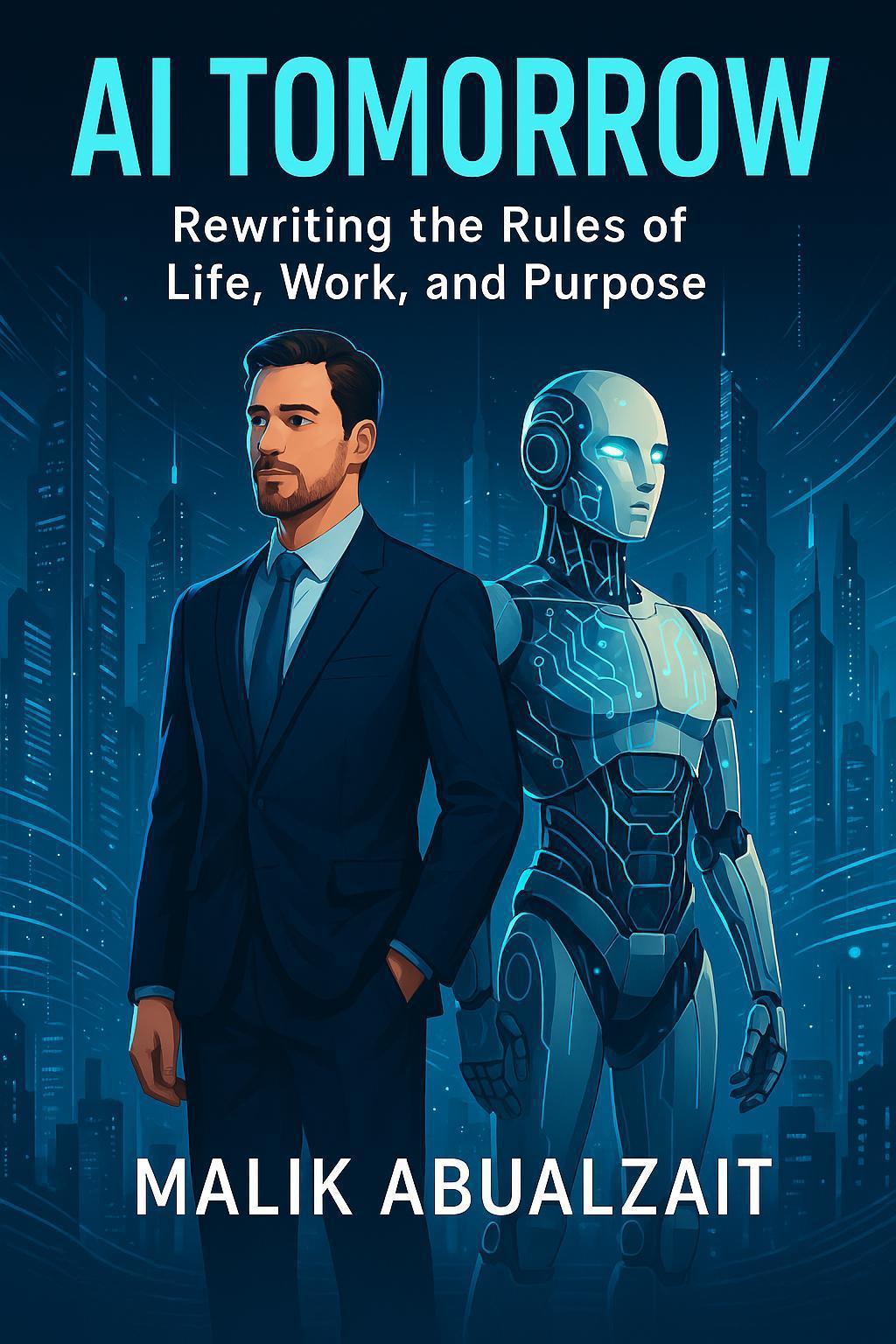
As mentioned in "AI Tomorrow: Rewriting the Rules of Life, Work and Purpose" by Malik Abualzait (available on Amazon), the idea of machines thinking stretches back to ancient Greece. Myths told of automatons, mechanical beings imbued with life, which symbolized humanity's innate desire for creating intelligent machines. Fast-forward to the 20th century, and we see the emergence of AI as a science. In 1950, Alan Turing posed the question that would spark a new era: "Can machines think?" His test envisioned a machine indistinguishable from a human in conversation.
The Birth of AI: Dartmouth Conference (1956)
Just six years after Turing's question, the term "artificial intelligence" was coined at the 1956 Dartmouth Conference. This seminal event marked the beginning of AI as we know it today. Researchers like John McCarthy, Marvin Minsky, and Nathaniel Rochester gathered to discuss the possibilities of creating intelligent machines. They laid the foundation for what would become a rapidly evolving field.
The Evolution of AI: Key Milestones
- 1956: The Dartmouth Conference coining of the term "artificial intelligence"
- 1950s-60s: Rule-based systems, early machine learning algorithms
- 1980s: Expert Systems and neural networks
- 1990s: AI winter (reduced funding and interest) followed by resurgence with deep learning
Real-World Applications: From Science Fiction to Reality
AI is no longer confined to science fiction movies or books. It's a reality that permeates our daily lives:
- Virtual Assistants: Siri, Alexa, Google Assistant
- Predictive Maintenance: Preventing equipment failures in industries like manufacturing and healthcare
- Personalized Medicine: AI-driven diagnosis and treatment recommendations
1. Healthcare: AI-assisted diagnosis, robotic surgery, and personalized medicine
2. Transportation: Self-driving cars, route optimization, and traffic management
3. Education: Adaptive learning platforms, intelligent tutoring systems
The impact of AI on society is multifaceted:
- Job Displacement vs. Creation: AI may automate some tasks but also create new job opportunities in fields like AI development, data science, and ethics consulting.
- Increased Productivity: Automation enables humans to focus on high-value tasks, leading to improved efficiency and productivity.
1. AI's History is Rich with Lessons: Understanding the evolution of AI can help us better navigate its current applications and future developments.
2. The Future of Work is Uncertain: As AI transforms industries, it's crucial to invest in education and retraining programs to prepare workers for the changing job market.
Conclusion:
Artificial intelligence has come a long way from its ancient roots to its modern breakthroughs. Malik Abualzait's comprehensive guide, "AI Tomorrow: Rewriting the Rules of Life, Work and Purpose" (available on Amazon), provides an in-depth look at AI's history, implications for society, and future prospects.
To master the history and evolution of AI, get your copy of 'AI Tomorrow: Rewriting the Rules of Life, Work and Purpose' by Malik Abualzait on Amazon: [https://www.amazon.com/dp/B0FXV2LB56](https://www.amazon.com/dp/B0FXV2LB56)
By understanding the past and present of AI, we can better prepare for its future implications and harness its potential to drive positive change in our world.
By Malik Abualzait